Creating Along the Values of the Past
December 11, 2025
Adaptive reuse is not merely about the contemporary repurposing of existing buildings. It is an architectural approach that builds on the values of the past, responds to the needs of the present and points toward the future.
From the very beginning, our studio’s work has been guided by the belief that architecture is never a closed process, but rather an ongoing dialogue with history, the surrounding environment, and the evolving needs of society. The following projects—two built and two at the concept stage—clearly illustrate our approach, in which the legacy of the past serves as an inspirational foundation upon which contemporary, livable and meaningful spaces can be created.
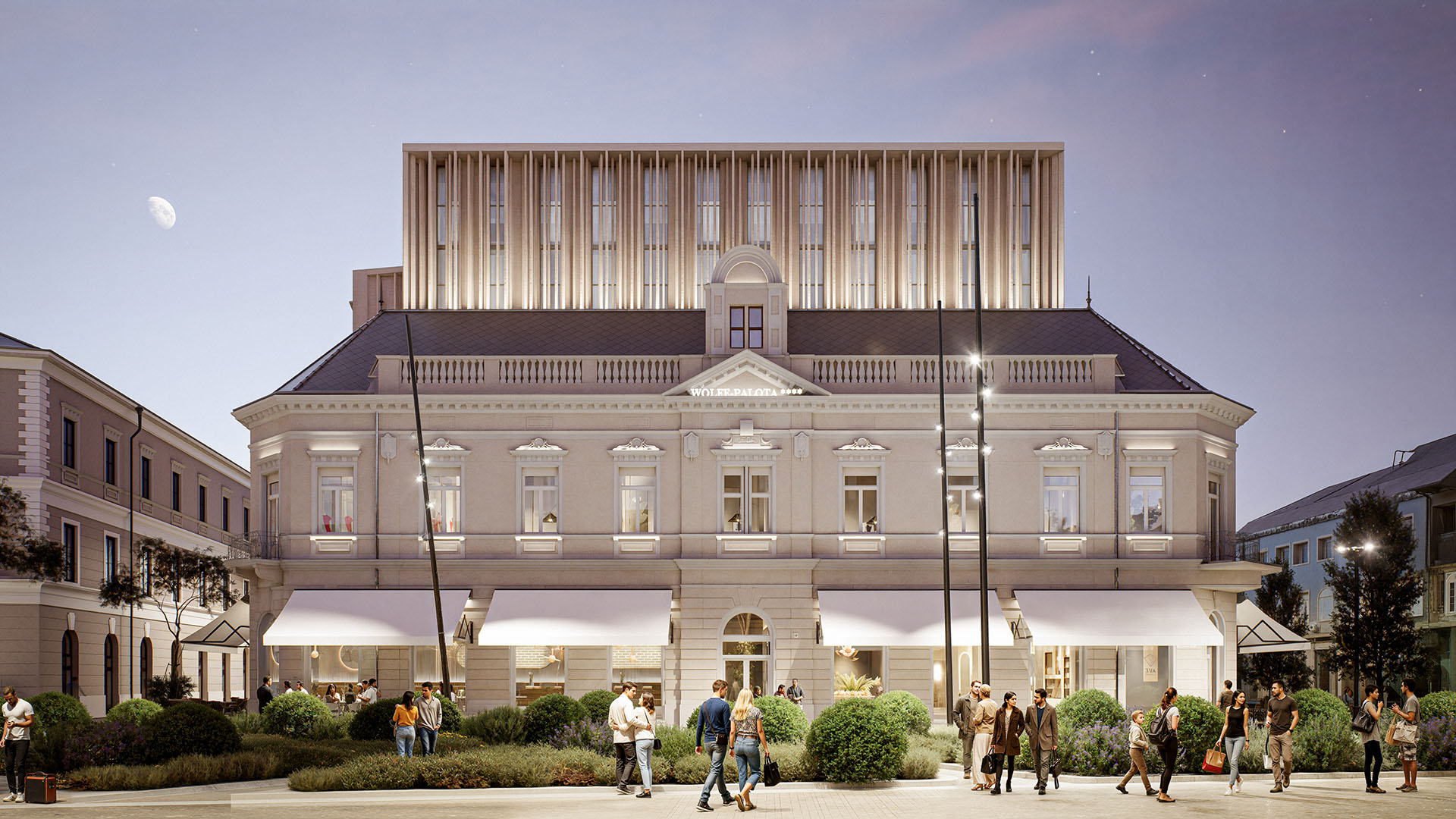
Competition Proposal for the Wolff Palace
The Wolff Palace—formerly known as the “Napló Headquarters”—is one of the iconic turn-of-the-century buildings in the historic center of Debrecen. Originally built in 1904 as a residential palace, its structure and functions have changed several times over the decades. From 1954 onward, it housed the editorial offices of the county daily newspaper and the regional MTI agency for many years. In 2024, the building became the property of the city, which set out to restore and expand the palace and bring it back to life with a new function. The architectural competition for its renovation therefore called for the design of a modern hotel.
The two-story, pitched-roof, courtyard building situated on the corner of Dósa Nádor Square now stands alongside five-story residential neighbours. Meeting modern functional requirements while establishing architectural connections with its surroundings was therefore a key design task. In our proposal, we preserved the atmosphere of the inner courtyard. At the core of the building we placed the lobby, vertical circulation, and the multi-level open corridors providing access to the hotel rooms. Above the original roof ridge, a recessed two-story volume connects the palace to the neighbouring buildings. The façade of this new addition is defined by vertically articulated, flute-like limestone panels, evoking the rhythm and cadence of the palace’s original vertical architectural elements. The design envisions the building being reborn in a new, modern context that meets the expectations of a city community that is both sensitive to tradition and open to development.
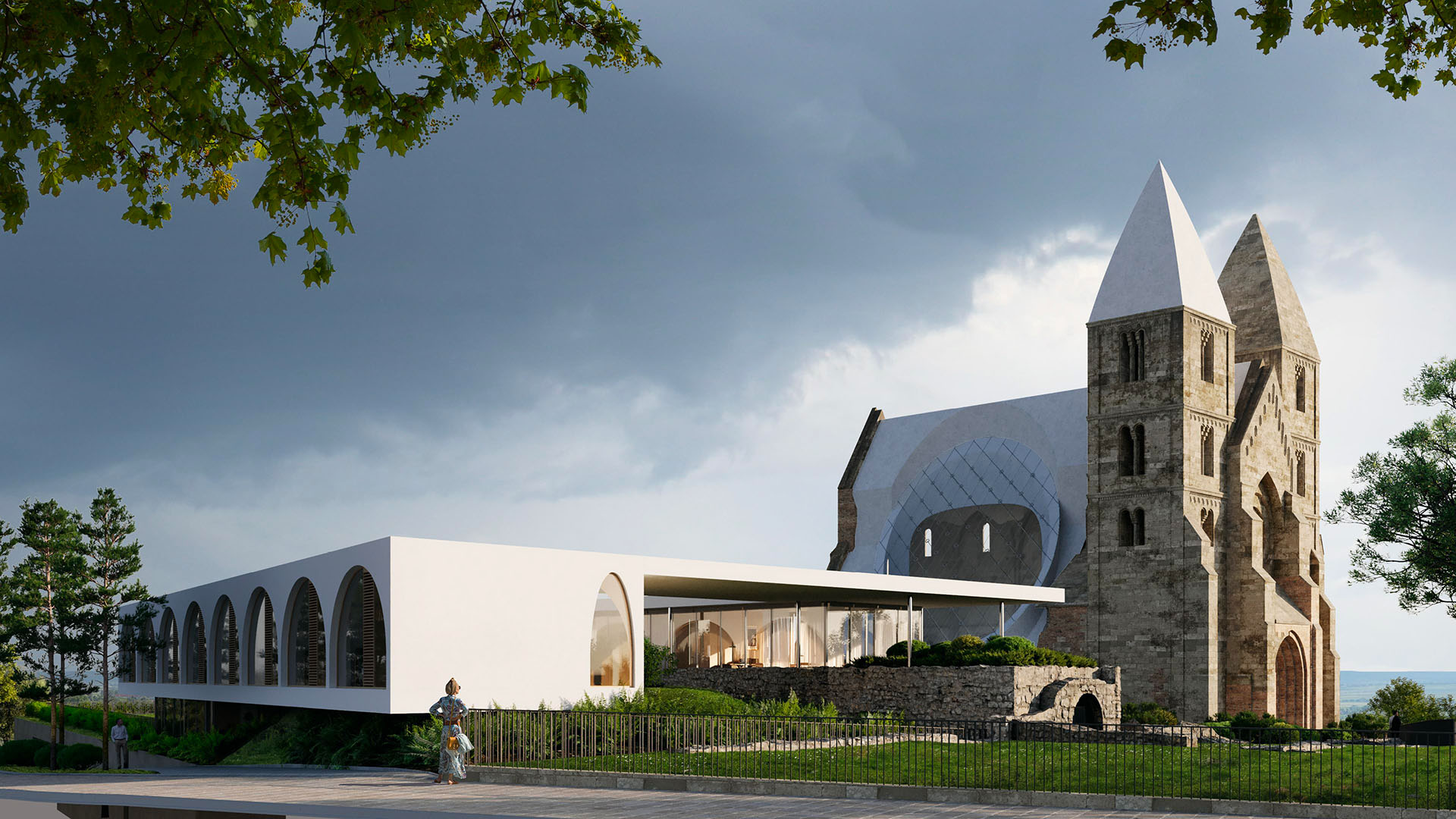
Competition Proposal for the Zsámbék Church Ruins
The Zsámbék church ruins are one of the most significant architectural heritage sites of the Hungarian Middle Ages. In our competition proposal for its restoration, our goal was to preserve the unique atmosphere of the ruin while ensuring its long-term sustainability and usability. The site is complemented with visitor and museum functions capable of hosting diverse cultural events in the future. In the restoration concept, the heritage of the past and the new additions remain clearly distinguishable, yet together allow the perception of the original massing and a subtle sense of its former interior space to re-emerge as a unified experience.
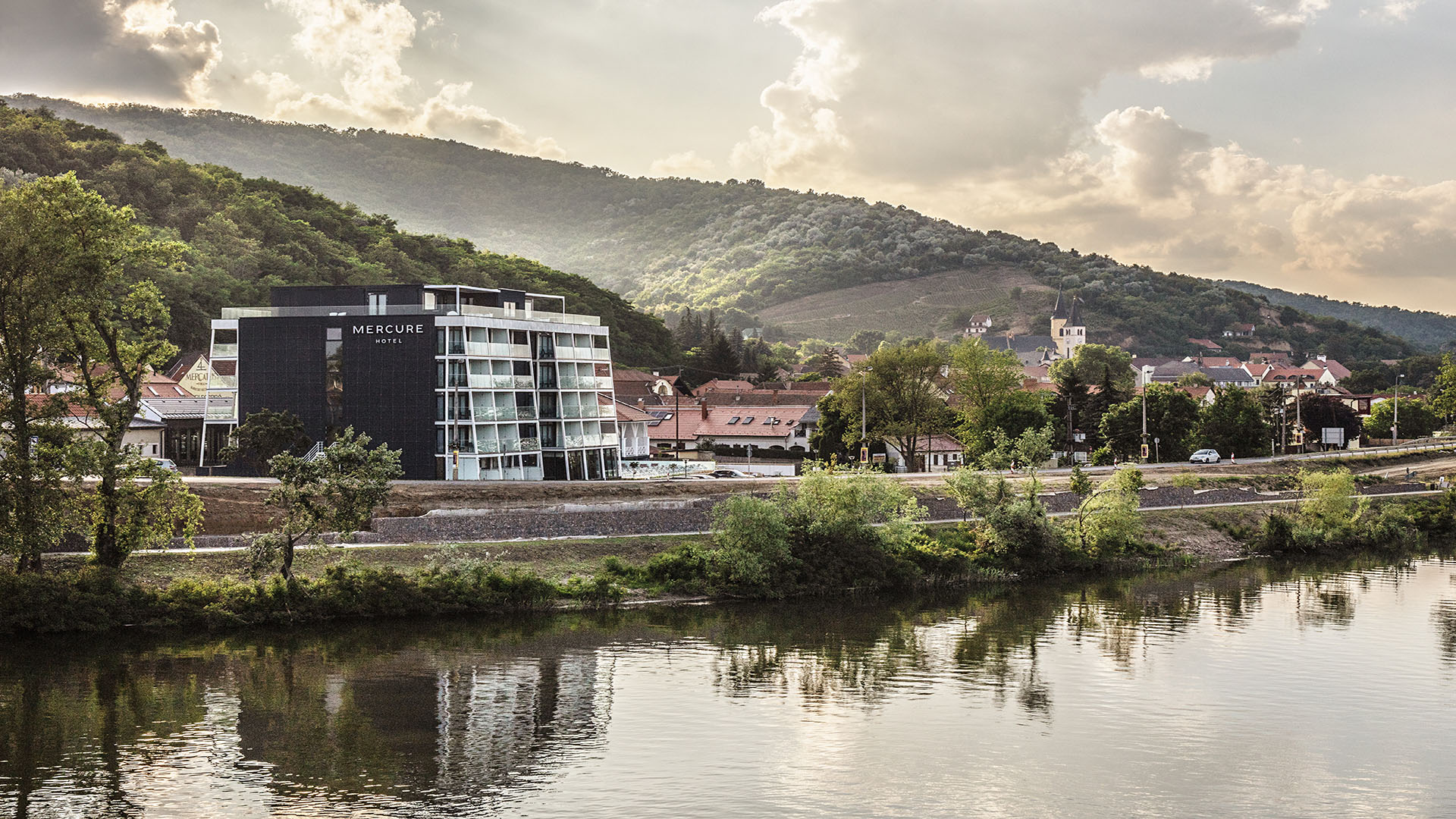
Mercure Hotel Tokaj
The adaptive reuse of the hotel, originally built in the 1970s using tunnel formwork technology, began with reintegrating the building into a city structure that had significantly changed over time. While preserving the original concrete structural frame, the Mercure Tokaj was expanded with a recessed rooftop floor and a street-front volume, and its façade was completely redesigned. With its contemporary architectural solutions, the renewed hotel conveys sustainability, modernity and high quality in the heart of the region’s central town—offering a refined destination for wine- and nature-loving visitors.
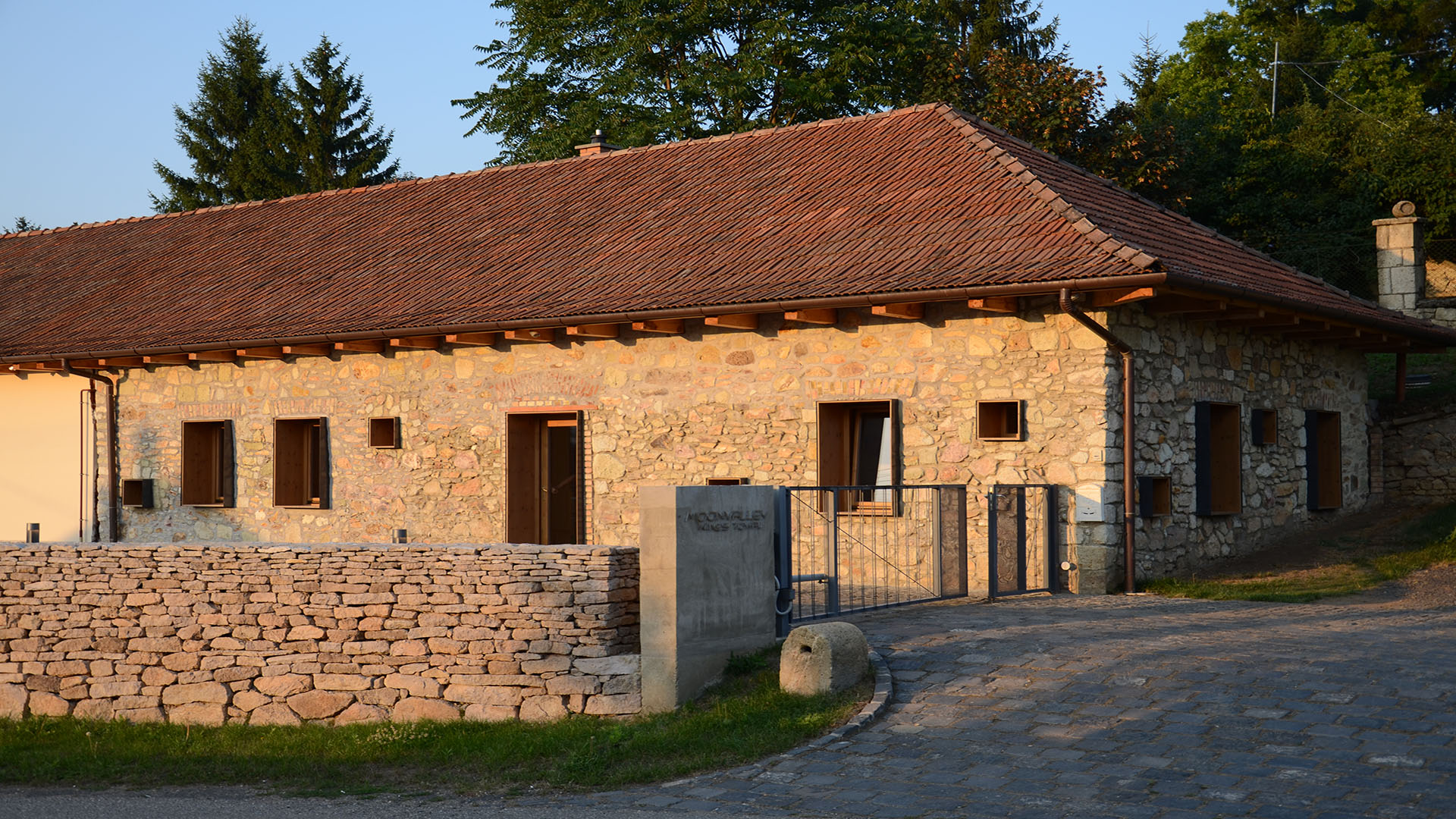
HOLDVÖLGY “Cottage”
The task at the HOLDVÖLGY “Cottage” was to transform a charming old dwelling into a small winery facility. Built in 1792, the house’s thick stone walls were complemented and extended using modern architectural tools and artisanal craftsmanship, with a focus on local materials. The building received a new roof, and custom-designed wooden doors and windows were fitted both into the original stone walls and the new extension. The renewed building blends harmoniously into the townscape of Mád, creating a bridge between past and present, tradition and contemporary architectural culture.
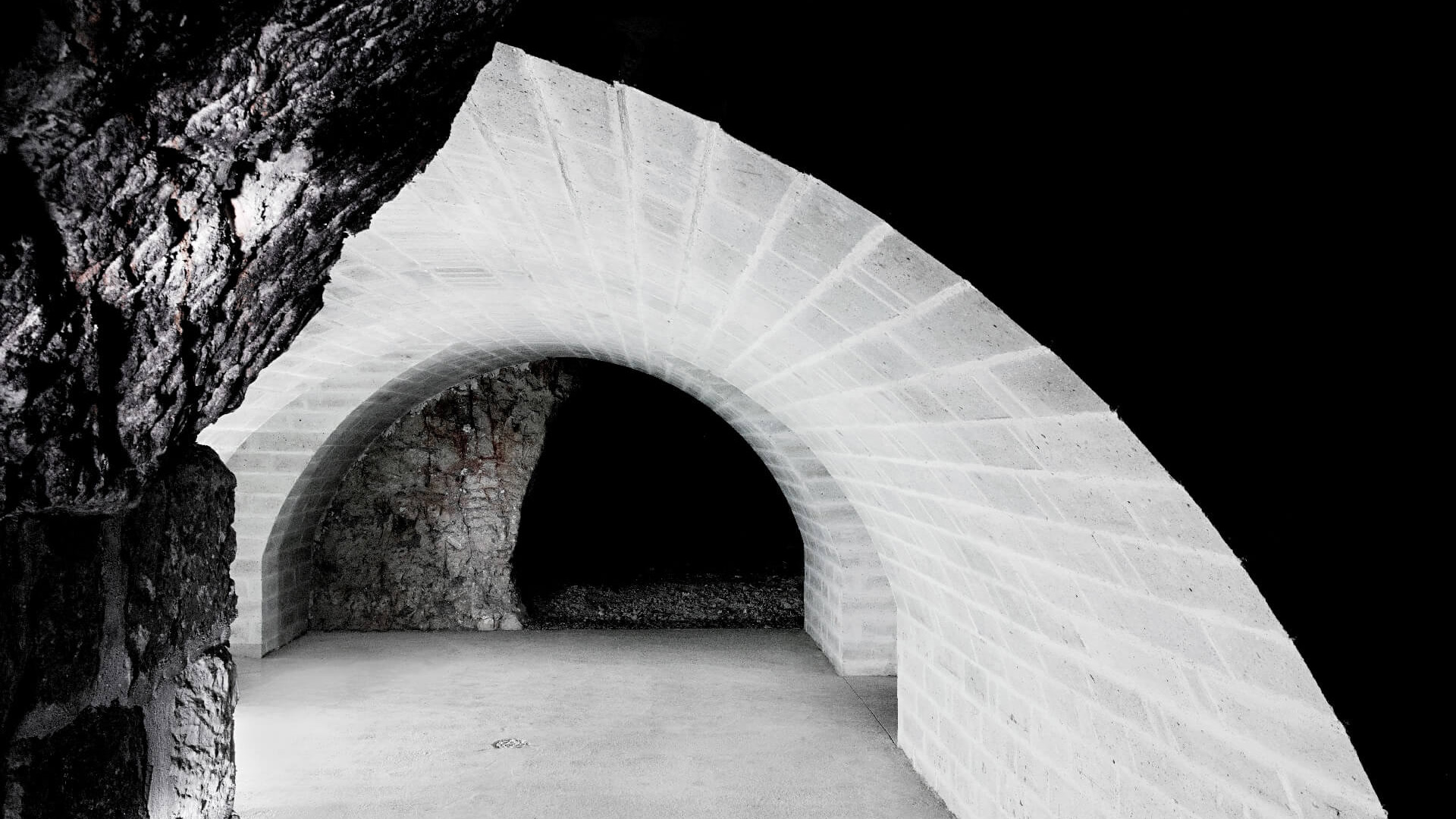
A section of the renovated cellar passages beneath the HOLDVÖLGY Winery
We believe that the values embedded in the built environment do not disappear over time; instead, they form layers—layers from which richer, more livable and identity-shaping contemporary spaces can emerge. At BORD Architectural Studio, we strive in every project to make this sense of continuity perceptible: what we preserve should continue its life with dignity, and what we add should connect to the spirit of the place with respect and thoughtful intention.